Friday, October 28, 2011
Pilot project kicks off with Audi A1 e-tron in Munich
As of today, 20 units of the Audi A1 e-tron are on the roads of the Munich pilot region. Some trial participants even got the keys to their electric cars weeks ago. Audi, E.ON, the public utility Stadtwerke München and Technische Universität München (TUM) are project partners in this fleet trial. E.ON and SWM are in charge of expanding and maintaining the charging infrastructure in the Munich metropolitan area.
As a symbolic gesture, Audi handed over the A1 e-tron fleet vehicles today to its project partners and trial participants. E.ON and SWM have installed a demand-oriented charging infrastructure; SWM within the Bavarian capital’s city limits and E.ON primarily in outlying areas. All electric fueling stations offer power generated via renewable energies. This fleet trial is part of the "Modellregion Elektromobilität München" (Electric Mobility in Munich as a Pilot Region) project, sponsored by Germany’s Federal Ministry of Transport, Building and Urban Development. The Ministry is providing the region with some ten million euros for electric mobility. This project will address a number of issues, ranging from the power grid itself to data transfer between drivers, vehicles, and electric fueling stations. For example, the use of a smartphone as a driver’s main interface will be examined.
"Audi works relentlessly on comprehensive approaches which maximize benefits to customers. In this era of electric mobility, we will offer our customers a wide range of services which go beyond driving itself. For example, the networking of vehicles with their surroundings and with infrastructure as well as new concepts of mobility will be important," emphasizes Franciscus van Meel, Head of Electric Mobility Strategy at AUDI AG. He adds: "We want to use this fleet trial to learn more about our customers’ usage of electric cars, and their expectations in this regard. We are planning additional fleet endeavors in strategically important markets."
The Audi A1 e-tron is an electric car with a range extender. Its output of 75 kW (102 hp) enables the A1 e-tron to reach a top speed of 130 km/h (80.78 mph). If the battery runs out of energy, then a compact combustion engine – the range extender – recharges the battery as needed to boost the vehicle’s operating range to as much as 250 km (155 miles). This compact electric car is a zero-emissions vehicle for the first 50 kilometers (31 miles) of a trip – in city traffic, for instance. The battery comprises a package of lithium-ion modules mounted in the floor assembly in front of the rear axle. In short, the four-seat A1 e-tron was designed for daily driving in metropolitan areas. It consumes a mere 1.9 l/100 km (123.80 US mpg), for a CO2 equivalent of just 45 g/km (72.42 g/mile)*.
As Ruth Werhahn, Head of Electric Mobility at E.ON AG, emphasizes: "The fleet trial which started today will only add to the expertise we have been acquiring during more than ten pilot projects for electric mobility in six European countries. We have blazed new trails in the charging infrastructure. We have set up not only public charging points near large cities but also innovative charging points at multi-level parking lots in city centers. Drivers simply insert their parking-lot tickets to use the charging points and then pay for their electricity along with the parking fee."
E.ON has already developed commercially viable charging solutions for various scenarios. For example, the company markets a package to private individuals in Germany: green power and a charging box for use at home. But E.ON first conducts a safety inspection of these customers’ electrical equipment. After all, not every electrical outlet and its wiring is designed to withstand the heavy loads associated with recharging an electric vehicle for hours. E.ON also supplies charging stations open to the general public – primarily commercial customers. At these stations, two electric cars can recharge their batteries at the same time via different charging points. Magnetic-stripe cards grant drivers access. Both types of electric fueling stations are being used in the Munich fleet trial. In addition, E.ON is fostering the continuous enhancement of charging technology by focusing on direct-current (DC) fast charging as well as cable-free charging.
Dr. Florian Bieberbach, Commercial Director at SWM: "We have been working with partners for quite some time on various projects concerning individual electric mobility. As the operator of streetcars and subway trains, we have more than 115 years of electric-mobility experience in public transportation. SWM is responsible for the charging infrastructure within Munich city limits; we also offer the green power which facilitates CO2-neutral driving. The foundation for this was laid by our Renewable Energies expansion campaign. We want to generate enough green electricity by 2025 to supply the entire Munich metro area with electricity. Munich is thus on pace to become the world’s first city of a million-plus inhabitants to achieve this ambitious goal."
TUM is collecting and analyzing data on people’s mobility during the project. In which situations do people drive electric cars and to what degree? And how will this technology influence the use of other means of transportation? To answer these questions, the departments of Automotive Engineering and of Ergonomics have developed a mobile application that all fleet-trial participants can use on their smartphones. More specifically, these devices will thoroughly document participants’ mobility behavior – from their use of bicycles through electric cars and combustion-engine passenger vehicles to buses and trains. At the same time, the Department of Services Marketing is conducting a study to ascertain suitable models for billing electric-mobility customers.
"For researchers, it is no longer a question of whether electric mobility will catch on, but rather when. Electric mobility constitutes a paradigm shift for companies and society alike. This fleet trial allows us to learn more about people’s mobility habits under a new set of circumstances," says Professor Markus Lienkamp at TU Munich’s Department of Automotive Engineering. "Insights from this project can then serve as the basis for worthy approaches to sustainable individual mobility."
Thursday, October 27, 2011
Arcspeed launch EV roadster with 0-60 time to rival Tesla [video]
Sydney based Start-up Arcspeed have announced Australia's first EV Sports car.
The Arcspeed Roadster is a full-electric sports car, designed and built using a unique all-Australian designed Can-Am styled body & chassis with locally sourced BLDC motor and controller, drive train, lithium batteries, battery & car management systems. The Arcspeed Sports equals Tesla Roadster performance, delivering 0-100 kph in a claimed 3.8 seconds.
The main Li-ion battery array is under the cabin floor and is good for 150 km (90 miles) range with additional storage points designed into the chassis to double the range to 300 km (180 miles) at customer request. Arcspeed claims the car can be fully recharged in just four hours from a standard household socket, thanks to its dual onboard rechargers.
The company founders are; Keith White, tech integration and marketing, Ian Denner, the engineer behind Cobra replica outfit Classic Revival and Jaron Ware, an electrical engineer who is on the national executive of the Australian Electric Vehicle Association.
The guys have decided not to re-invent the wheel and will incorporate the ubiquitous tablet PC into the dash to control and monitor necessary functions. The car, which has been engineered to be easily built in right or left-hand drive, is still some ways off hitting the road - it still has to pass crash tests and the like - but the team have plenty of experience of this with the Cobra replica business and hopes to bring it to market late 2012 for less than $100k.
Source: Arcspeed
BMW Peugeot Citroen Officially launch Electrification joint venture
One year after the two partners signed a memorandum of understanding, the joint venture formed by the BMW Group and PSA Peugeot Citroën to develop and manufacture hybrid and drive technology is now up and running.
The launch of the joint venture "BMW Peugeot Citroën Electrification" creates the necessary conditions for the swift implementation of their common goals. Production of hybrid components for the electrification of both companies' models is scheduled to begin in 2015. BMW Peugeot Citroën Electrification is aimed at becoming one of the leading players in the field of electric powertrains within a few years, as well as a pacesetter on the road to the mobility of the future. Through the creation of an open technology platform, the joint venture intends to provide crucial support for the European industry as it structures itself in this domain.
"The BMW Group and PSA Peugeot Citroën are following a joint path with clear and ambitious goals," explained the Chairman of the Managing Board of BMW Peugeot Citroën Electrification Wolfgang Güllich. "We want our company to be one of the leading suppliers in the field of electric powertrains over the next years." To achieve this, the BMW Group and PSA are investing more than 100 million euros in the joint venture. Around 400 employees will work at the new Research and Development Centre in Munich by the end of 2011: The main profiles required are engineers specialised in electro-mobility and electronics.
The hybrid components designed there will be manufactured at the facility in Mulhouse in France, which will have around 250 employees once ramp-up is complete. The development and production spectrum of BMW Peugeot Citroën Electrification comprises all relevant components for electric powertrains, such as high-voltage batteries, electric motors, generators, power electronics, loading units and energy management software. As part of its independent activities, the joint venture will create an open technology platform that will allow it to integrate suppliers into the development and purchasing process and sell the hybrid components it produces to third parties.
"We will set new standards for tomorrow's clean mobility with our agility, efficiency, and world class know-how in electrification systems" mentioned Jean Leflour, Managing Director of BMW Peugeot Citroën Electrification.
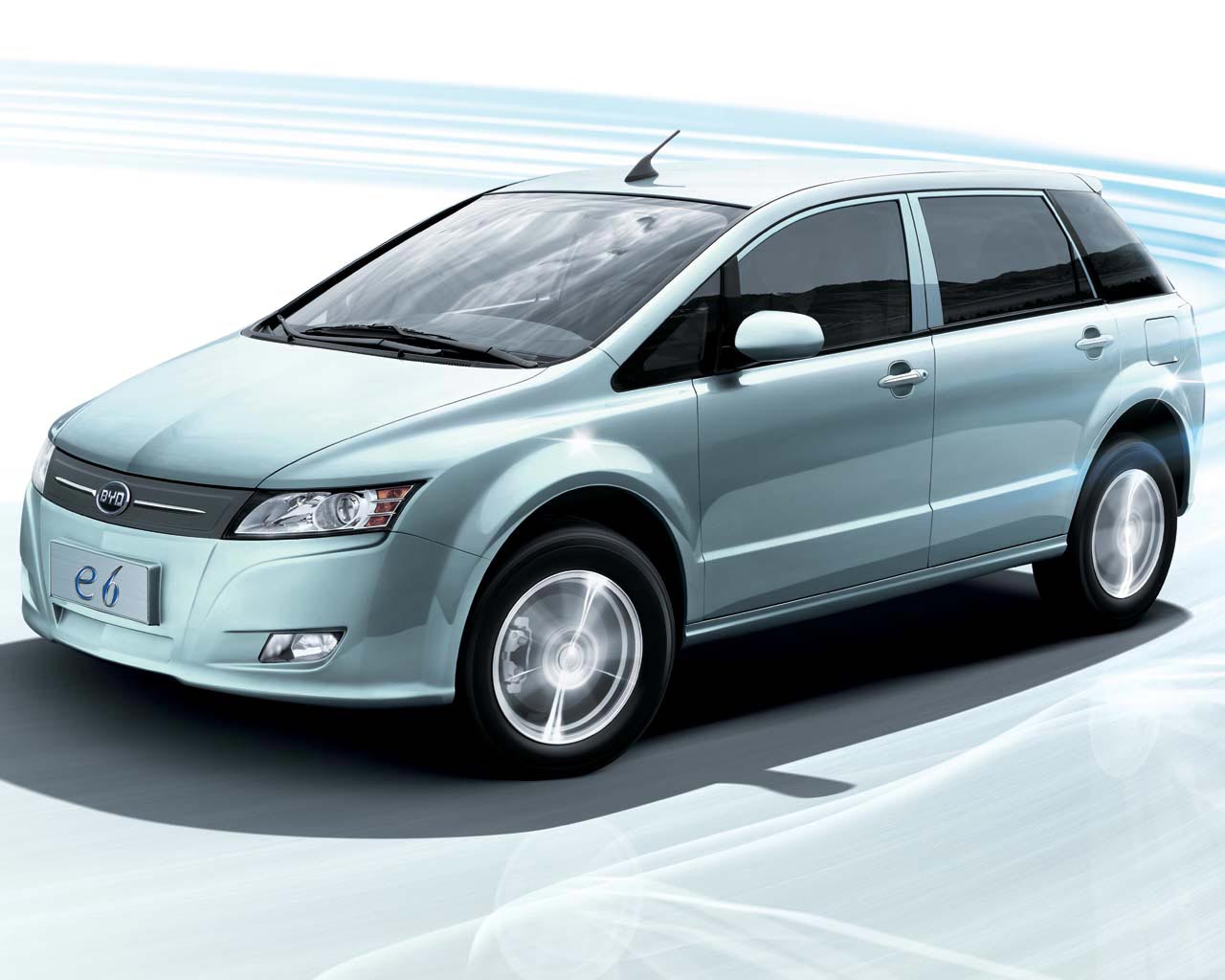
BYD e6 Electric Vehicle Now Available for Consumers in China
With public EV charging infrastructure achieving critical mass in the city of Shenzhen, China, BYD announced that starting today their popular five-passenger, long-range, all-electric cross-over vehicle, the BYD e6, will be available for consumer purchases (previously available for fleet purchases). Consumers in Shenzhen will receive a substantial government subsidy — equivalent to about $18,000 USD (or 120,000 RMB) — and the e6 unsubsidized price will start at ~$56,900 (or 369,800 RMB). The final price to consumers will be ~$38,430 (or 249,800 RMB). This is the very first domestic, long-range, all-electric vehicle for sale to consumers in China.
BYD e6s are a familiar sight in Shenzhen and have been in operation in government and taxi fleets for nearly 18 months. The Shenzhen taxi fleet, using BYD’s e6 exclusively, have accumulated over 3.8 million fleet miles (or 6 million Km) — many of these single e6’s with mileage over 100,000 miles (or 160,000 Km). BYD estimates that this single-car-mileage is equivalent to over 10 years’ usage for real-world consumers. The excellent quality and success of the e6 and the stable battery performance have now been recognized by operators and consumers alike in Shenzhen.
Powered by BYD’s independently developed Iron-Phosphate (or “FE”) batteries, BYD’s e6 has a driving range of over 190 miles (or 300 Km) — the longest-driving-range, 5-passenger vehicle in its class and nearly double the range of its closest 4-seat competitor. In addition to the longest driving range, BYD also provides superior charging solutions for both consumers who want to charge at the rapid-charging stations in Shenzhen or own their own private parking and prefer to charge overnight or with renewable power. Together with China Southern Grid, one of the largest utility companies in China, BYD has promised to assist these consumers with charging cabinet installation.
With the launch of the consumer e6, BYD is also deploying some new breakthrough technologies and high-end equipment as standard in this model. This launched e6 will implement the newly developed “i” System (also called “BYD-i”). BYD-i was researched and developed by BYD independently, allowing many vehicle functions to be performed remotely by smartphone and using cloud-data for high-tech driving assistance. “i” is an intelligent, in-vehicle, network platform, wirelessly capable of communicating your vehicle system’s information and providing remote-control access through your secure wireless devices. It achieves a secure-docking link that builds the next-generation “Car-Networking” infrastructure.
“i” has a simple, intuitive interface with 24-hour online call center access and emergency services from thousands of our provider-partners. “i” becomes an information portal with terminal access to services like Keyless Entry System, DVD & Voice Navigation System, Mobile Digital TV and Rear Camera Parking Assistance. The new e6 is continuously connected to the internet and the mobile communication network through BYD-i, and therefore owners can utilize their smart phones to lock and unlock car doors remotely, initiate air-conditioning (to heat or cool the interior), location-based services (and vehicle location), search for news, or real-time information (stocks/flights/weather), as well as communicate with a service call center for help or time of accident. Seamless access to these cloud data functions, make the e6 the most advanced vehicle in its class — a forerunner and a standard-bearer again in the digital revolution.
On Dec. 15, 2008, the BYD F3DM was launched as the world’s first dual-mode electric vehicle — F3DM sales reached over 1,000 vehicles. In September 2010, BYD launched a 40ft (12M), long-range, all-electric eBUS in Changsha city and Shenzhen city. 300 e-Taxis (using the BYD e6) and 200 e-BUSes joined the Shenzhen new energy fleet of the 2011 Universiade in Shenzhen in August 2011 with global fanfare. The launch of the new BYD e6 for consumers further marks BYD’s commitment to electrified transportation solutions.
Wednesday, October 26, 2011
Chevrolet Showcases Spark EV Electric Motor [video]
From home appliances to children’s toys, electric motors are all around us and have nearly a century of automotive use dating to Charles Kettering’s invention of the electric starter first used in 1912. With the emergence of electric vehicles, electric motors also will play a bigger part in future vehicles.
“We’ve spent the past few years highlighting our in-house battery capability, which will play a significant role as one of our core competencies going forward,” said Larry Nitz, GM executive director of Vehicle Electrification Engineering. "Electric motor development and manufacturing is another area of expertise we’ll need as we expand vehicle electrification technologies to address the needs of our customers around the world.”
Chevrolet is highlighting its expertise in electric motors at a pilot facility in Wixom, a Detroit suburb, in advance of beginning the domestic production of electric motors at GM’s plant in White Marsh, Md., near Baltimore in late 2012. Specifically, equipment and processes to be used at White Marsh are being validated and tested in Wixom.
Conventionally powered vehicles on the road today have a variety of electric motors to power seats, windows, windshield washers and other functions. Electric motors are used in hybrid and electric vehicles to move the drive wheels to propel the vehicle. Electricity is stored in a battery and feeds power to the electric motor to drive the wheels.
GM is focused on the development of permanent magnet and induction motors for a variety of applications. During a recent tutorial at the Wixom facility, news media were given the opportunity to hand build portions of a permanent magnet motor, the exact 85 kW (114 hp) permanent magnet motor configuration that will be used in the recently announced Chevrolet Spark electric vehicle to debut in 2013.
The White Marsh facility will produce electric motors for the Spark and other future vehicles. Currently, GM uses electric motors as part of the propulsion system in nine vehicles including the Chevrolet Volt, Chevrolet Malibu Eco, Chevrolet Silverado Hybrid, Buick Lacrosse eAssist, Buick Regal eAssist, GMC Sierra Hybrid, GMC Yukon and Yukon Denali Hybrid, and Cadillac Escalade Hybrid.
Tesla plans all-new Roadster
Next year’s Tesla Model S saloon is just the first model planned by the Californian electric car maker in an aggressive product roll-out that includes an all-new Roadster and a range of cars to rival the BMW 3-series.
The 5-series-sized Model S will spawn a crossover Model X variant next year, and it’s likely to be followed by a cabriolet in 2013. Tesla CEO Elon Musk also confirmed to Autocar that in 2014 the firm will launch a new Roadster, which will no longer be based on Lotus mechanicals.
Although Tesla has made a loss on every Roadster sold, Musk said the car was significant in helping to establish the firm and electric cars in general. “Bob Lutz has said the Roadster prompted General Motors to do the Chevrolet Volt,” he said. “We’re trying to change the industry.”
Musk added that the new Roadster would be based on a “third-generation platform”, which is likely to be a shortened version of the architecture just developed for the Model S and its derivatives.
“This platform will spawn a range of cars in the next four to five years,” Musk said. “It’ll be a more mass-market platform for cars like a 3-series as well as the new Roadster. These cars will supplement the Model S range.”
Polaris Announces $28M Investment In Brammo
Brammo Inc, a leading developer of electric vehicle technology and manufacturer of two-wheel electric vehicles, announced today that it has closed a $28 million Series B funding round designed to accelerate the company's development plans.
The final tranche of the Series B was led by Polaris Industries and included further contributions from existing shareholder Alpine Energy, while adding NorthPort Investments LLC. Polaris, a recognized leader in the powersports industry joins the team as a key strategic partner for Brammo, bringing opportunities to broaden the range of markets for Brammo Electric Vehicle (EV) drivetrain technology and expertise.
"We are excited to add Polaris Industries as a valued strategic partner. Brammo and its partners are combining forces to gain dominance in the EV powersports market," said Brammo, Inc., Founder and CEO Craig Bramscher. "We now have the ability to maintain our high standards of quality while we innovate and commercialize at speed, and this enables us to better serve our customers and build a sustainable advantage. Polaris is the clear leader in powersports and our manufacturing partner, Flextronics, is a global leader in electronics manufacturing. Our products are the synthesis of powersports and electronics. Polaris and Flextronics present the best possible partners to help Brammo achieve the scale and prolific product development plans we have for the coming years."
The foundation of Brammo's success lies in its innovative battery and powertrain technology, which is integral to its expanding product line, including the Enertia - urban commuter, Empulse - sports motorcycle, and Engage and Encite - super moto and off road motorcycles. This same EV technology has potential in both the powersports and the low speed vehicles markets. The intent of Brammo's strategic partnership with Polaris is to enhance Brammo's leadership in the 2 wheeled EV space, while broadening its reach in terms of product development, geographic reach and aggressive growth; all while continuously improving quality, performance, and customer service.
Flextronics enables Brammo to scale through time efficient procurement, supply chain optimization, and high quality assembly. Additionally Flextronics is partnering with Brammo on its battery packaging design and is providing design for manufacturing (DfM) services to Brammo. Currently producing the Enertia at its Sarvar facility in Hungary, Flextronics is about to begin producing the Brammo Power™ battery packs at its Frickenhausen facility in Germany.
Subscribe to:
Posts (Atom)