Thursday, October 20, 2011
Jay Leno's Garage - Proterra Ecoliner Electric Bus [video]
The Proterra Ecoliner Electric Bus, will this vehicle revolutionize mass transit? It incorporates elements of Formula 1, naval and tank technology, but the most important thing about this bus is the rapid charger on its roof, which means it can run 24 hours a day, seven days a week!
Source: Jay Leno's Garage

Wednesday, October 19, 2011
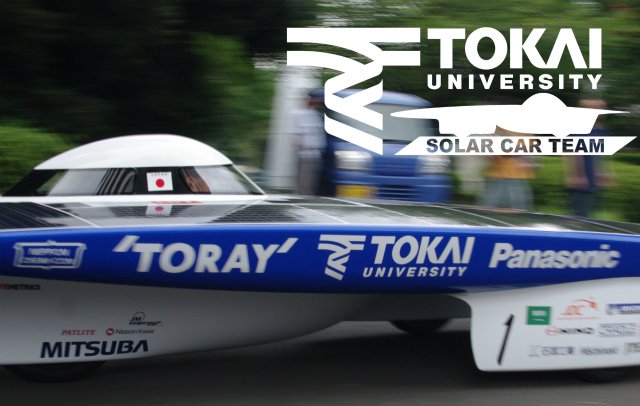
Tokai Uni wins World Solar Challenge

Tokai University has taken the World Solar Challenge after one of the tightest last days in the history of the race. After 3,000 km and four days, less than 30 minutes separated first and second place, with The Netherlands' Nuon team running a close second.
In a race disrupted by bushfires and rather unusually marred by a vehicle fire that somewhat crimped Team Solar Philippines’ style, the winners crossed the finish line at 1.05pm Darwin Time. Nuon is expected within another 40 minutes.
Today’s stretch to the last compulsory checkpoint at Port Augusta was highly competitive with the Dutch Team Nuon hitting the mark about 25 minutes after Tokai.
But Port Augusta to Adelaide turned in to a bit of a procession, with heavy traffic, a couple of road works and overcast skies impeding progress. The solar car averaged 100km/h on the final stretch, despite the challenging conditions.
Australia’s best-placed team is Aurora, currently placed fifth.
2011 Veolia World Solar Challenge
Day 5 - Thursday 20 October 2011
Provisional Results
1. Tokai University
2. Nuon Solar Car Team
3. University of Michigan
4. Ashiya University
5. Solar Team Twente
6. Aurora
7. Umicore Solar Team
8. UNSW Solar Team
9. Istanbul University
10. Stanford Solarcar Project
Revenge of the Electric Car: Unused Intro
Here's the exclusive first look at an unused introduction to Revenge of the Electric Car -- opening in theaters in New York and California this Friday!
The Audi e-tron Spyder in Malibu, California [video]
The Audi e-tron Spyder features what is without a doubt the most advanced and simultaneously the most consistent evolution of the current Audi design language, while also providing initial hints at the design language of future Audi sports cars.
It reinterprets the most important design elements that already characterized the previous e-tron concept vehicles. This also ensures the necessary formal differentiation to the purely electric-powered Audi e-tron shown at the 2010 Detroit Motor Show.
The two-seater is equipped with a 300-hp twin-turbo V6 TDI at the rear axle and two electric motors producing a total of 64 kW at the front axle. The Audi e-tron Spyder's low total weight of 3,196 lbs combined with the high-torque TDI and the two electric motors results in respectable performance. The car accelerates to 60 in less than 4.5 seconds, and top speed is electronically governed at 155 mph.
Tokai leads Nuon as competition hots up in World Solar Challenge
After nearly 2,500 kilometres just 40 kilometres separate the two leading cars in the
2011 Veolia World Solar Challenge. Team Tokai from Japan are approximately 160
kilometres from Port Augusta as they prepare to make camp, with second placed
Nuon approximately 200 kilometres from Port Augusta. Team Michigan is spending
the night in Glendambo some hundred plus kilometres behind.
Team Twente from the Netherlands is in fourth place for now just south of Coober
Pedy and involved in a close competition with Ashiya from Japan (5th) and Aurora
from Australia (6th) both in Coober Pedy – with only an estimated 20 kilometres
between them. Umicore from Belgium is in 7th place, with University of NSW in 8th
place, Istanbul University in 9th place just north of the South Australian border and
making up the top ten is Stanford University team.
All 37 teams are still participating in the race which now spans more than 1260
kilometres from the rear of the field in Ti Tree to the leaders. The top eight teams are
all within the South Australian border. Australia’s third team from TAFE SA reached
Alice Springs this afternoon at 4.40pm.
The Philippines team who suffered battery problems late yesterday were able to
repair their car SIKAT II in Tennant Creek yesterday and have travelled today on solar
power – they are optimistic they will still be able to reach Adelaide.
The stage is set for an exciting finish which could come down to the wire. The first
teams are expected in Adelaide tomorrow afternoon at the finish of timing near the
corner of St Kilda Road and Port Wakefield Road in Angle Vale and then at the
Ceremonial Finish and celebrations at Victoria Square.
Tuesday, October 18, 2011
Hertz Adds Five Transit Connect Electric Vans to Its Fleet [video]
The Hertz Corporation announced the addition of the Ford Transit Connect Electric van into Hertz's fleet. The five Hertz units will be deployed mid-November at multiple locations as part of Hertz Entertainment Services and Hertz on Demand car sharing.
"Hertz Entertainment Services and Hertz on Demand customers have unique vehicle needs and the Transit Connect Electric is a perfect fit for customers looking for the latest in mobility solutions while also achieving best in class sustainability practices," commented Mark P. Frissora, Hertz Chairman and Chief Executive Officer. "We expect to deploy the Transit Connect Electric in our B to B programs for customers who need a light duty van with a high degree of cargo capacity as a part of their fleet solutions."
"Since launching last year, a broad cross-section of businesses including utilities, delivery companies and even law firms have used the Transit Connect Electric to green their fleets," said Nancy Gioia, director of global electrification, Ford Motor Company. "With its new Transit Connect Electric fleet, Hertz will allow even more businesses in a variety of new industries to experience 100 percent electric and zero-emissions driving."
"The value-add of working with a marquee rental company like Hertz is that multiple end-users will get behind the wheel and experience our Transit Connect Electric first hand," said Scott Harrison, Azure Dynamics CEO. "Although driving performance and cargo versatility will be familiar compared to the conventional product, our Force Drive(TM) powertrain runs entirely on electricity, producing zero tailpipe emissions, and will likely be the first electric drive experience for many of Hertz customers."
According to independent data, rental car companies collectively operate approximately 1.63 million vehicles in the United States. As the economy gains traction, it is expected that U.S. rental companies will add vehicles to their fleets including fuel efficient 'green' vehicles.
Hertz Entertainment Services rents vehicles to various studios and entertainment companies that often choose to rent vehicles during periods of increased activity. Hertz On Demand is a pay-on-demand car membership club based on hourly rental services. The Transit Connect Electric program is a chance for both divisions to explore opportunities for the van's inclusion in the fleet.
Hertz continues to improve the fuel economy of its vehicles through is Global EV eco-mobility program, which is championing an electric and plug-in hybrid vehicle mobility ecosystem that incorporates transportation options that minimize the impact of its operations on the environment and enables the company to continue consistent sound environmental behavior.
The Ford Transit Connect Electric utilizes Azure's proprietary electric powertrain system and Johnson Controls' advanced lithium-ion battery to achieve a range of 50 to 80 miles depending on auxiliary usage and drive cycle and is rechargeable using either a 240-volt or standard 120-volt outlet. Commercial vans generally return to a central location at the end of each driving cycle making for easy overnight recharging. Use of the Transit Connect Electric vehicles will also reduce fuel and maintenance costs, as well as reducing greenhouse gas emissions.
Toyota develops prototype battery with 5x the range @ 1/5 th the cost

Toyota, in cooperation with the Tokyo Institute of Technology and the High Energy Accelerator Research Organization, has developed a prototype battery that can be processed into sheet form. The battery has up to five times the energy storage capacity of existing Li-ion batteries, the Nikkei reported Monday.
Since the battery can easily be processed into sheet form, it can store several times the amount of electricity, volume for volume, than the current generation of electric vehicle batteries, according to the developers. This added capacity may extend the maximum driving distance per charge for compact EVs to around 1,000 km [621 miles] from the 200km or so for existing vehicles.
Currently, Li-ion batteries with high energy and power densities used organic liquid electrolytes; these, however, require relatively stringent safety precautions, making large-scale systems more complicated and expensive. The use of solid electrolytes—which would address many of those issues associated with the liquid electrolytes—is currently limited by their conductivities.
Toyota and its partners earlier this year published a paper in the journal Nature describing the development of a lithium superionic conductor Li10GeP2S12 that has a new three-dimensional framework structure. The new material exhibits an extremely high lithium ionic conductivity at room temperature, the highest conductivity achieved in a solid electrolyte, exceeding even those of liquid organic electrolytes.
The new solid-state battery electrolyte has many advantages in terms of device fabrication, stability, safety and excellent electrochemical properties.
Toyota plans to improve the battery and commercialize it sometime in 2015 to 2020.
Japan’s New Energy and Industrial Technology Development Organization predicted it will be possible to cut the battery production cost to one-fifth to one-tenth the current level by 2020.
EV News have reported on Toyota developing everything from a magnesium battery that holds twice the energy of lithium-ion cells to a Solid state lithium cobalt battery.
Jeffrey Makarewicz, the engineer managing the U.S. projects, said in an interview at the North American International Auto Show in Detroit the automaker’s U.S. unit, based in Torrance, California, is also looking at aluminum and calcium as potential battery materials. In Japan, company engineers are researching “lithium air and metal air” batteries, he said, without elaborating.
Subscribe to:
Posts (Atom)